Keeping a keen edge has always been part science, part craft. From river stones used by early metalworkers to today’s guided systems and professional mobile vans, knife sharpening devices have evolved to meet new steels, new culinary demands, and the age‑old need for safety and precision. In this guide, we trace that evolution and explain where each method shines—plus when it’s wiser (and greener) to book a professional.
At a glance
- Oldest tools: natural stones and simple steels (honing rods)
- Modern leap: synthetic stones, diamond plates, ceramics, guided jigs
- Convenience era: electric sharpeners and pro mobile services
- Best practice: combine regular honing with periodic sharpening by an expert
A brief timeline of sharpening devices
Pre‑industrial era — Natural whetstones
Sandstone, slate, and Novaculite were shaped into bench stones. Users controlled angle by experience; water or oil reduced friction and carried swarf.
Industrial age — Honing steels & workshop wheels
Butchers popularised steel rods to realign edges between grinds. In workshops, large water wheels ground tools and blades, speeding up metal removal.
20th century — Synthetic abrasives arrive
Aluminium oxide and silicon carbide stones brought predictable grit ratings and faster cutting, with flatter surfaces and lower cost.
Late 20th — Guided systems & angle jigs
Clamp-and-rod systems, fixed-angle jigs, and pull‑throughs aimed to standardise bevels for non‑experts, improving repeatability.
1990s–2000s — Electric sharpeners
Countertop units with motorised belts or wheels offered speed and set angles, appealing to busy homes and some small kitchens.
2000s–today — Diamond & ceramic technologies
Diamond plates slice hard powder steels efficiently; ceramic rods offer slow, fine refinement and long service life.
Today — Professional mobile setups
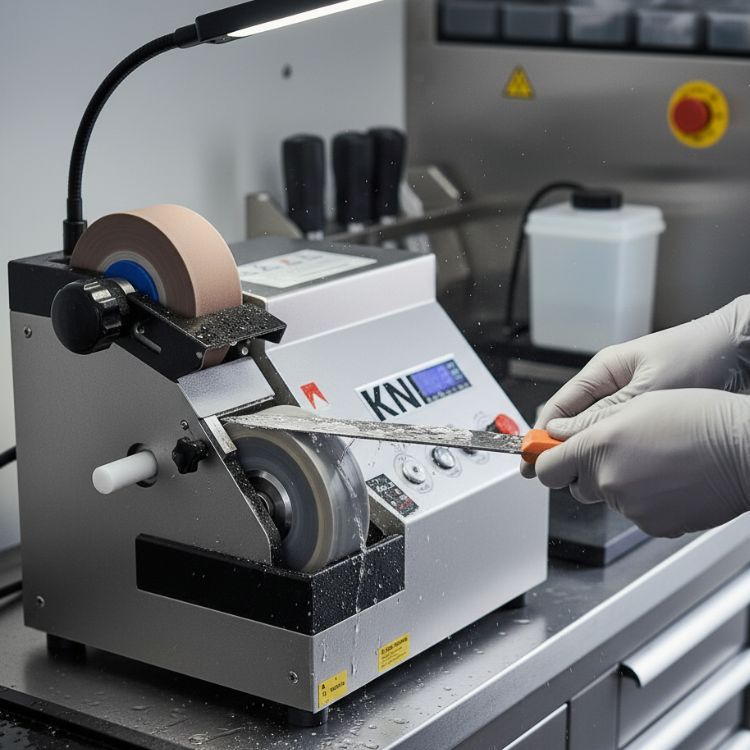
On‑site specialists combine industrial‑grade abrasives, variable speed machines, water cooling and hand finishing—bringing workshop precision directly to domestic and professional kitchens.
Honing vs sharpening: the crucial difference
- Honing (steeling): realigns a rolled edge; minimal metal removal; great for daily upkeep.
- Sharpening: recreates the apex by removing metal; requires controlled geometry, heat management, and finishing appropriate to the steel and use‑case.
Tip: Hone little and often; sharpen less frequently but properly. For heavy use (restaurants), professional sharpening on a regular schedule preserves knives and budgets.
The main device families, explained
1) Natural and synthetic whetstones
How they work: Abrasive particles wear the steel to form a new apex. Water stones cut fast and are easy to read; oil stones cut slower but can leave a very refined edge.
Pros
- Ultimate control and finish (with skill)
- Works for most steels and profiles
- Quiet, low‑tech, low waste
Cons
- Learning curve; needs flattening/maintenance
- Time‑consuming in commercial settings
Best for: Enthusiasts, premium knives, custom bevels.
2) Honing rods (steels and ceramics)
How they work: Rather than removing much metal, they straighten a fatigued edge. Ceramic rods add mild abrasion for micro‑sharpening.
Pros: Fast, great between shifts; extends time between full sharpenings.
Cons: Won’t fix chips or bluntness; incorrect technique can round the edge.
Best for: Daily maintenance in busy kitchens.
3) Guided jigs & pull‑through sharpeners
How they work: Hold a set angle using rods, clamps, or fixed slots with abrasive wheels or plates.
Pros: Repeatable angles for non‑experts; portable.
Cons: Limited to certain geometries; can over‑grind heel/tip; cheaper pull‑throughs may fatigue edges.
Best for: Consistent results on workhorse knives when time is short.
4) Electric sharpeners (wheels & belts)
How they work: Motorised abrasives remove metal quickly at pre‑set angles; some have multi‑stage grits and honing/polishing steps.
Pros: Speed; minimal setup; easy for staff to use.
Cons: Heat risk on thin edges; fixed angles don’t suit every blade; uneven wear on short or flexible knives.
Best for: Light to moderate domestic use; not ideal for fine Japanese profiles unless carefully managed.
5) Diamond plates & ceramic systems
How they work: Diamond electroplated plates cut very hard steels; ceramics refine and deburr to a crisp apex.
Pros: Efficient on modern stainless and powder steels; long‑lasting; stay flat.
Cons: ‘Grabby’ feel; can be too aggressive without light pressure; higher initial cost.
Best for: Modern alloys, field kits, flattening stones.
6) Professional mobile systems
How they work: Specialists combine machine grinding under cooling with hand‑stoning and strops, repairing chips, re‑profiling bevels (e.g., 50/50 Western vs 70/30 Japanese), thinning behind the edge, and polishing according to task.
Pros
- Precision geometry and heat control
- Repairs and thinning that gadgets can’t do
- Faster and more economical than replacing knives
- On‑site convenience with minimal downtime
Cons
- Requires booking; quality depends on the provider (choose vetted experts).
Best for: Restaurants, hotels, caterers and home cooks who value edge quality, safety and sustainability.
When to upgrade from a gadget to a specialist
- Your knives slip even after steeling. Edge is fatigued—needs real sharpening.
- Chips, bends, broken tips. Repairs need heat control and even geometry.
- Mixed collection (Japanese & Western). Different bevels and steels benefit from tailored approaches.
- Time is money. A 30‑minute on‑site visit can restore a whole set without logistical hassle.
Why London Sharpening Service?
- Mobile, on‑site across London (Zones 1–6): we come to your kitchen to keep operations smooth.
- For domestic and professional chefs: homes, restaurants, pubs, hotels and caterers.
- Experts in Japanese and Western knives: correct bevels and finishes for each style.
- Same‑day service most days & quick booking: convenient scheduling with minimal downtime.
- Sustainable approach: we prioritise sharpening and repairing over replacing—better for your budget and the planet.
- Established credibility: over 600 five‑star reviews since inception and operating since 2001.
Ready to feel the difference? Book your slot here.