Quick answer
- Rock-chop, big batches, maximum toughness? Go Western (German/French profiles). They’re forgiving and versatile.
- Push-cut precision, light touch, clean slices? Choose Japanese (gyuto, santoku, bunka). Thinner geometry, sharper feel.
- Do a bit of both? Own one of each—or pair a gyuto with a classic Western utility.
Whatever you choose, regular professional sharpening keeps performance consistent and safe.
What actually differs?
1) Steel & hardness
- Japanese knives often use harder steels and finer grinds. That crisp bite lasts longer, but edges are less tolerant of twisting or prying.
- Western knives commonly use slightly softer, tougher steels that resist chipping and take everyday knocks in stride.
2) Edge angle & geometry
- Japanese: typically finished around 10–15° per side with very fine micro-bevels—excellent for effortless push-cuts.
- Western: commonly 15–20° per side, with more shoulder to the grind for durability and forgiveness.
3) Blade profile & cutting motion
- Gyuto / santoku: flatter bellies encourage push/pull cuts and precise tip work.
- Western chef’s knife: a more pronounced curve suits rock-chopping and a rhythmic “hinge” through herbs and onions.
4) Maintenance & sharpening
- Japanese: reward little-and-often care and careful technique on the board.
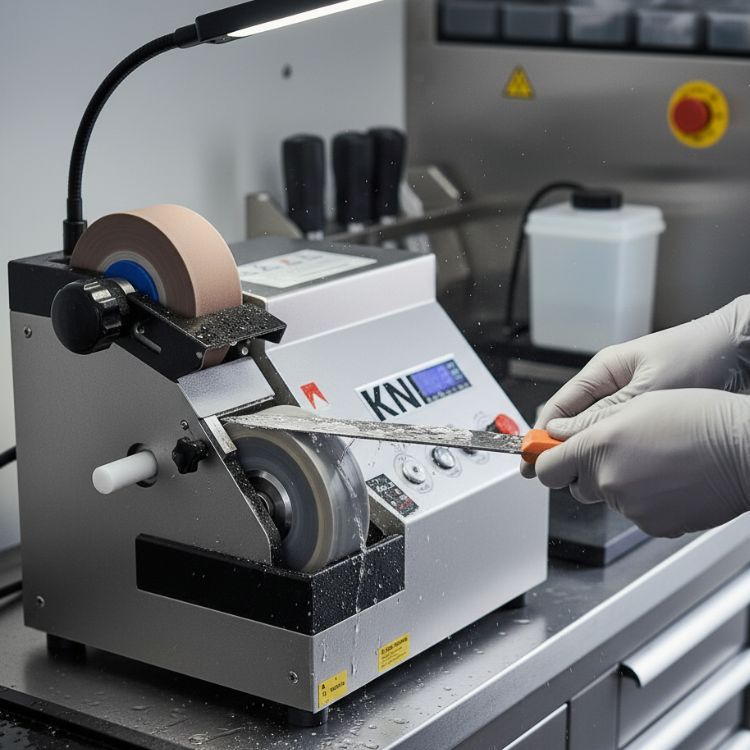
- Western: lower-maintenance, ideal for busy family dinners or high-volume prep. Either way, when performance dips—slipping on tomato skins, “crunching” herbs or visible micro-chips—professional sharpening restores that “brand-new” feeling. We sharpen on site across London and repair bent tips, nicks and even reprofile blades at no extra charge
Choose by cooking habit (this is where most buyers go wrong)
A) Batch-prep once or twice a week
Mountains of onions, carrots and potatoes; some herbs; boneless meats.
Pick: Western 8–10″ chef’s knife.
Why: durable grind, forgiving angle, ideal for rock-chop rhythm.
Sharpening note: 15–20° per side with a micro-bevel for edge life.
B) Precision-driven, clean push-cuts
Think neat tomato slices, fish, and delicate veg; technique over force.
Pick: Japanese gyuto (210–240 mm) or santoku (165–180 mm).
Why: thinner geometry lowers cutting resistance.
Sharpening note: 10–15° per side; add a faint micro-bevel to reduce chipping.
C) Family dinners at speed
Sheet-pan veg, stews, roast chicken—practical, not precious.
Pick: Western chef’s knife + paring knife.
Why: robust, less fussy between services.
Sharpening note: a sturdy 18–20° per side works brilliantly.
D) Sushi vibes & fine plating
Long, clean slices matter.
Pick: Japanese gyuto for versatility; add a yanagiba if sashimi becomes a passion.
Sharpening note: finish finely; protect in a saya/guard.
E) Want one knife to do it all?
Pick: Gyuto 210 mm if you lean precise; Western 8″ if you lean hearty. Many chefs happily keep one of each.
Myths we hear (and what actually matters)
- “Japanese knives are fragile.” Used with a good board and straight cuts, they’re precise, not fragile.
- “Western knives can’t be razor sharp.” With proper sharpening, they absolutely can—and often hold up better under heavy hands.
- “One angle fits all.” Your habits dictate geometry: finer for precision, sturdier for abuse. We tune edges to the user, not just factory specs.
Comfort, balance and grip
Edge care that actually works
- Use the right board: end-grain wood or quality plastic; avoid glass or stone.
- Clean & dry: warm water and mild soap; never soak.
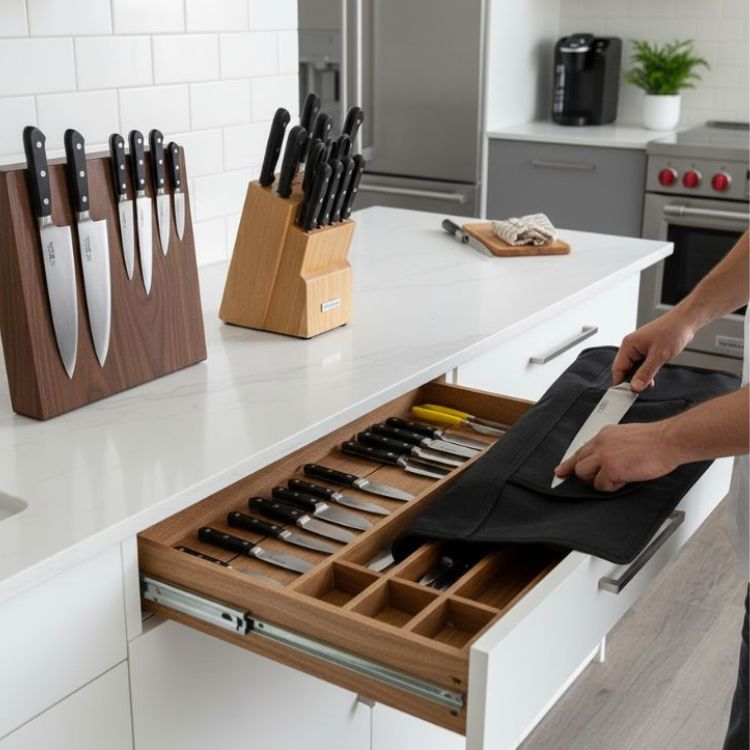
- Store safely: blade guards, blocks or magnetic rails prevent dulling.
- Little and often: light touch-ups extend time between full services.
When it’s time for a reset, our mobile sharpening comes to your door with online booking and 7-day availability (8am–7pm) across London Zones 1–6. Chip removal and tip repairs are included.
Recommended starter sets
- Busy home cook: Western 8″ chef’s + paring + bread knife.
- Knife-curious foodie: Japanese gyuto 210 mm + petty 120–150 mm.
- Meal-prep machine: Western 10″ chef’s + santoku for finesse + bread knife.
- Fish lover: Japanese gyuto + yanagiba (if sashimi’s your thing).