Why smart storage matters
Option 1: Wall-mounted magnetic strip (wood-faced is best)
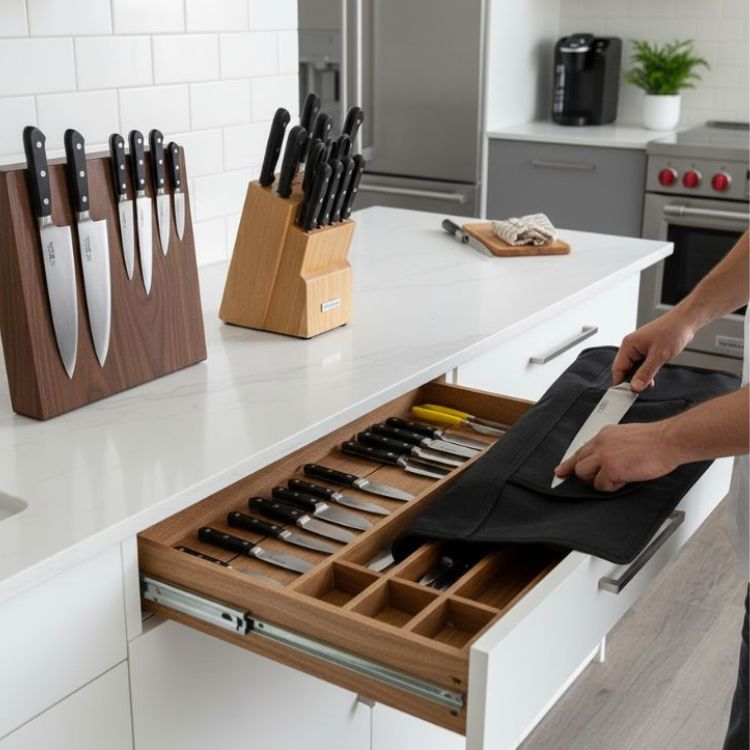
A quality magnetic rack keeps blades visible, dry and accessible, freeing up drawer and counter space. Wood-faced or knife-safe composite fronts cushion the steel so you’re not scraping against bare metal.
How to do it well: mount above prep height but below eye level; approach the strip spine-first, then roll the flat of the blade on—reverse the motion to remove. Leave a finger’s width between knives so handles don’t clash. Avoid cheap, overly strong bare metal bars that can “snap” blades on and fatigue thin tips.
Best for: active home cooks and pros who reach for multiple knives each session, carbon steel owners who want quick drying/airflow.
Option 2: Countertop block (with horizontal slots or bristles)
Blocks are familiar and stable. Modern versions with horizontal slots or removable bristles reduce edge wear and accept mixed sizes.
How to do it well: always insert knives fully dry; tip the block occasionally to clear crumbs; sanitise removable bristle cores in warm soapy water. Avoid glass or bamboo “window” blocks where edges rest against hard surfaces.
Best for: households without safe wall space, renters, starter sets.
Option 3: In-drawer organiser or block
A tidy, child-discreet solution that protects edges while keeping worktops clear.
How to do it well: choose a solid tray with individual channels so blades don’t meet; measure drawer depth to accommodate longer gyutos; keep the sharp edge facing down or away from the hand path. Add non-slip liners to stop sliding.
Best for: minimal, clutter-free kitchens or open-plan spaces where wall storage isn’t ideal.
Option 4: Blade guards, sayas and sheaths
If you rotate knives or carry one to classes or pop-ups, guards protect edges on the move and inside drawers.
How to do it well: pick snug, vented guards for stainless; for carbon steel, ensure the blade is bone-dry and lightly oiled before sheathing to avoid rust. Wooden sayas (for many Japanese knives) add style and stability—secure the pin so it can’t slip off in a drawer.
Best for: mixed storage, knife rolls, small kitchens, or guarding a few favourites.
Option 5: Knife roll or case (for pros and keen hobby cooks)
Fabric rolls and hard cases let you transport a kit safely between home and work.
How to do it well: use individual guards inside the roll to prevent edge-to-edge contact; keep rolls dry and clean; don’t store long-term if the fabric holds moisture—unpack at home and let knives breathe.
Best for: chefs, caterers, food stylists, and anyone who travels with knives.
Hygiene, safety and edge health—quick rules that matter
Always store knives clean and completely dry. Wipe carbon steel with a drop of food-safe oil if you won’t use it for a few days. Never leave knives loose in a drawer or in a sink where edges can collide or hands might meet sharp steel. Avoid dishwashers: heat, detergents and rattling accelerate corrosion and dulling. On magnetic racks, keep blades away from steam paths (kettle, hob) to minimise moisture and airborne grease. For homes with children, combine in-drawer storage with a safety latch or mount a rack well out of reach.
How storage affects sharpening intervals
Even the best storage won’t freeze time, but it massively slows edge fatigue. Protected edges keep their bite longer, meaning you’ll hone lightly and sharpen less often—saving steel and money. If your knives are already dull or chipped, fix geometry first, then upgrade storage so the result lasts.
Putting it all together—our practical recommendation
For most London kitchens, a wood-faced magnetic strip plus guards for the odd drawer-kept knife is the sharpest, safest, most space-efficient combo. If wall mounting isn’t possible, choose an in-drawer organiser with individual slots. Counter blocks still work well—pick horizontal slots or bristles and keep them clean and dry.
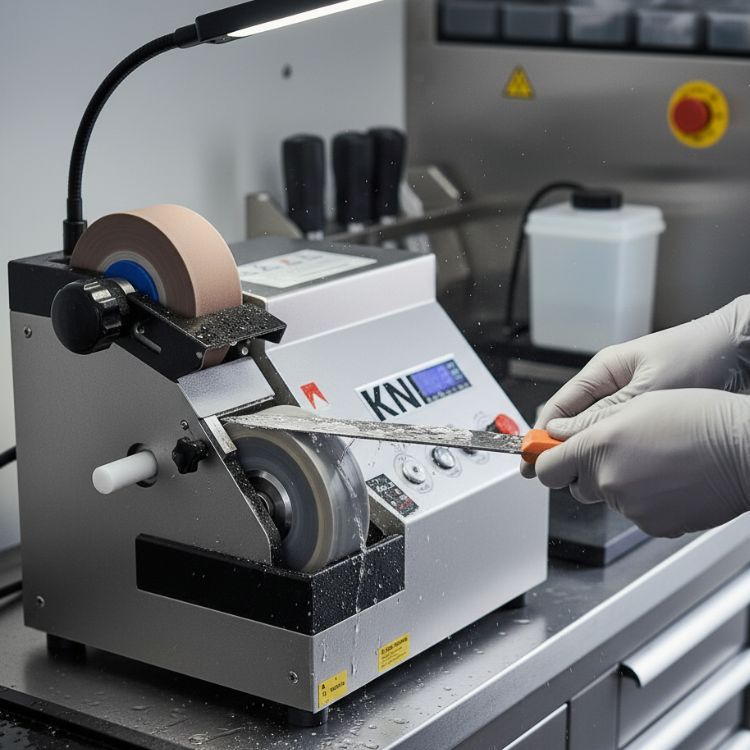
Want your newly stored knives to look and feel as new? We’ll restore the bevels, repair chips and nicks, and finish each blade to suit your cooking style. We work with both Japanese profiles (including Global Knives) and Western grinds, serving domestic and professional clients across London