The short answer
What actually “runs out” on a knife
Every sharpening removes a microscopic amount of steel to recreate a crisp apex. Over years, that removal slowly reduces blade height (distance from spine to edge). When a chef’s knife loses too much height, two problems appear:
- Board clearance: your knuckles start hitting the board.
- Profile drift: the curve (or flat) of the edge develops low spots or a “recurve”, making contact inconsistent.
On many German-style knives with a full bolster, the heel can also protrude as the edge wears back, creating a step that catches on the board. The fix is a bolster reduction and reprofiling, which restores a clean, continuous profile and buys years more service.
How much steel is removed per sharpening?
Factors that decide the real lifespan
- Steel & heat-treatment: Harder, tougher steels hold an edge longer, so you sharpen less often.
- Cutting surface: Soft wooden or rubber boards preserve the apex; glass, marble and hard plastics accelerate wear.
- Technique & tasks: Rocking through bones and squash is harsher than neat push-cuts on veg.
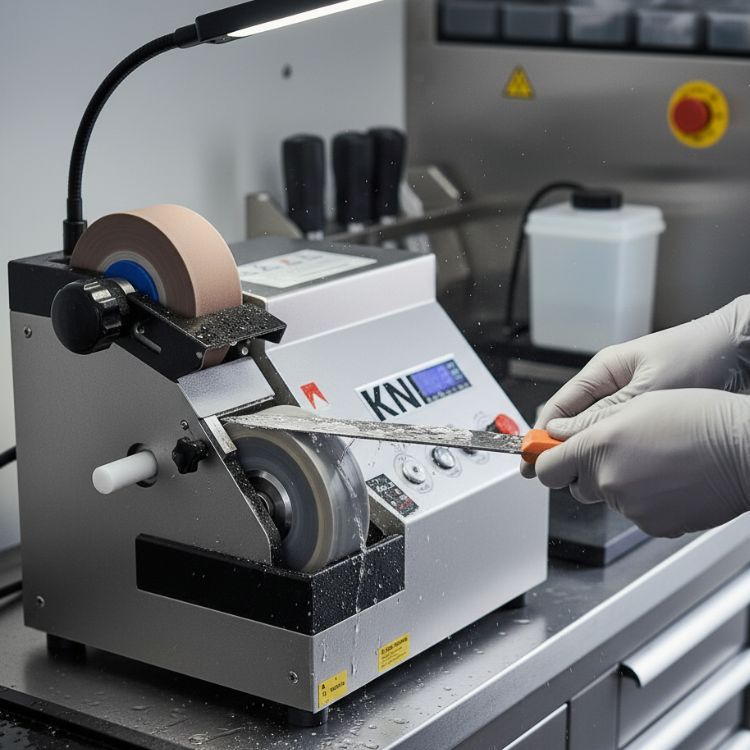
- Sharpening method: Water stones, diamond plates and professional machines (with cooling) are kinder than aggressive pull-through gadgets.
- Honing habits: Light, correct honing realigns the edge and delays the need for a full sharpen.
Rough expectations (real-world, not lab)
- Home cooks: With decent steel and good boards, you might fully sharpen 1–3 times a year, plus occasional touch-ups. That easily translates into many years to decades of use.
- Professional kitchens: High volume prep may need weekly or monthly sharpening. Even then, with periodic thinning and profile care, a favourite knife can power through thousands of shifts before reaching end-of-life.
Thinning: the secret to longevity
As the edge moves up the blade over time, the steel behind it gets thicker. If you only keep re-sharpening, the knife feels wedge-y and stops gliding. Periodic thinning (reducing material behind the edge and resetting angles) restores cutting feel and postpones retirement. It’s one of the biggest differences between a quick gadget sharpen and a proper service.
Signs your knife is nearing the end
- Heel or bolster hits the board despite recent sharpening.
- Recurve/flat spots you can’t remove without over-grinding.
- Blade height too short for safe knuckle clearance (common rule of thumb: a chef’s knife with <25–30 mm remaining is on borrowed time).
- Cracks or severe corrosion pitting near the edge.
- Over-thinned or overheated sections from past poor sharpening.
Even then, a skilled technician can often reclaim life with bolster work, re-profiling and thinning—it’s worth asking before you give up.
How to maximise the number of sharpenings
Keep edges sharper for longer so you sharpen less often, and remove less when you do:
- Use wooden or rubber boards; avoid glass and granite.
- Hand-wash and dry promptly; never dishwasher.
- Hone lightly (correct angle, low pressure) between full sharpenings.
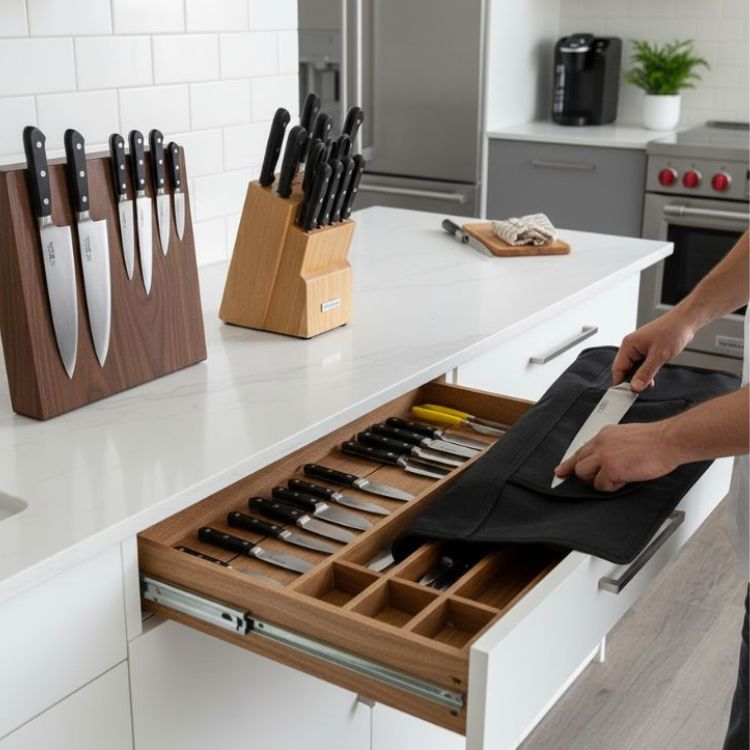
- Store blades so edges don’t collide—magnetic wood-faced rack, in-drawer organiser, or guards.
- Choose professional sharpening that manages angle, heat and geometry rather than high-speed “grind and hope”.
Our practical take
Think of sharpenings like services on a musical instrument. Little and often, with occasional deeper work, keeps performance high and preserves material. With that approach, a good knife has a very long life—and when it finally bows out, it will have paid you back many times over.
A long life by design, not by luck
A knife doesn’t “run out” of sharpenings; it simply needs the right care at the right moments. Keep geometry honest, thin when the blade starts to wedge, and give the edge an easy life with sane boards and light honing. Do that, and even a modest knife will serve for years with confidence and control. Find out more about our knife sharpening service in London.